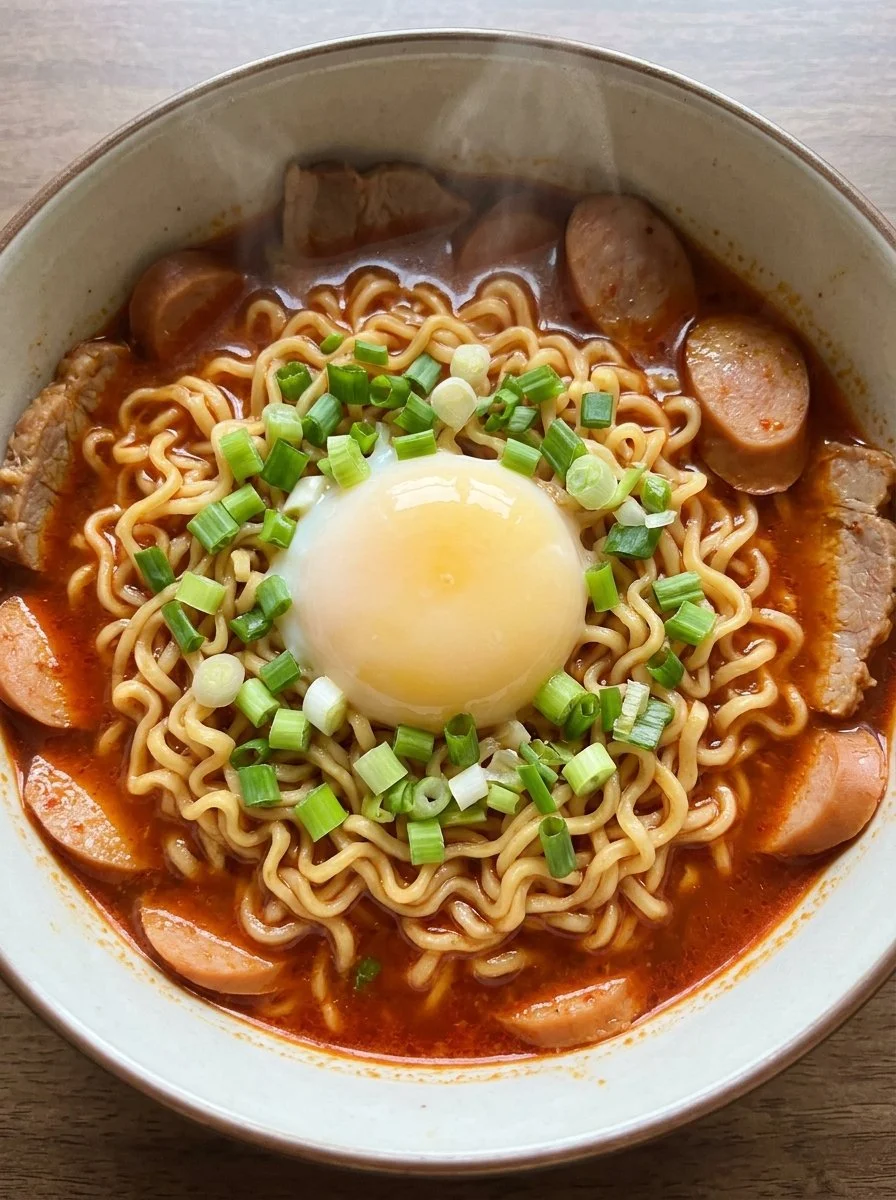
Satisfy Your Cravings: Comforting Budae Jjigae (Korean Army Stew)
As you take your first bite of the hearty Budae Jjigae, the sizzling sound of bubbling broth fills the air, teasing your senses. The rich, umami aroma wraps around you like a warm hug, bringing memories of cozy nights spent around the table. The moment it touches your lips, you can taste the delightful medley of textures—tender tofu, juicy sausages, and the satisfying slurp of springy noodles.
The Origin & Heritage
Budae Jjigae, known as Korean Army Stew, has its roots entrenched in the tumultuous history of post-war Korea. This dish represents resilience—cooked up using available leftovers, it became a staple in Korean homes during the war. Imagine walking into Grandma’s kitchen, where the fragrant stew is bubbling away, and the clink of metal spoons brings everyone together. This beloved stew, combining rich culture and heartiness, serves as a comforting reminder that even in tough times, family meals foster warmth and connection.
The Science of Flavor
- Umami Bomb: The combination of canned meats, kimchi, and gochujang creates a deep, savory flavor profile that tantalizes the taste buds.
- Balance: The sugar in the sauce counteracts the kimchi’s tanginess, striking a perfect balance that enhances every ingredient.
- Texture Harmony: Firm tofu provides a soft, creamy contrast to the chewy sausages and the crunch of seafood mushrooms, elevating each bite.
- Aromatic Garlic: Minced garlic not only infuses bold flavor but also releases natural oils that harmonize with broth for depth.
- Visual Appeal: The layered presentation of colorful ingredients and vibrant green onions creates a feast for the eyes, enhancing the meal experience.
The Ingredients:
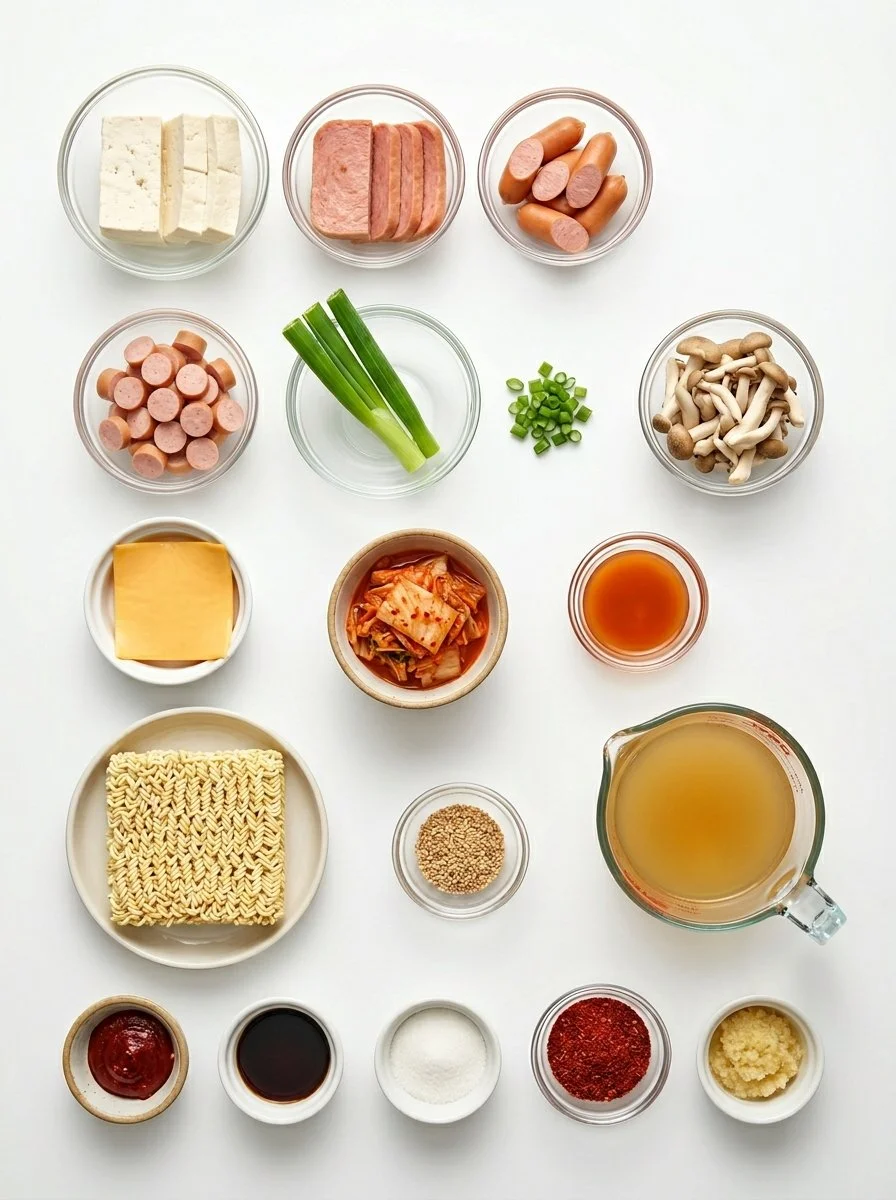
Base Ingredients:
- 1/2 block firm tofu (sliced)
- 1/2 can canned meat/spam (sliced)
- 3 sausages (sliced)
- 1/2 medium onion (sliced)
- 2 stalks green onions (cut into thirds, reserve some for garnish)
- 1/2 packet seafood mushrooms (or 1 packet enoki mushrooms)
Flavor Enhancers:
- 1 slice American/cheddar cheese
- 1/3 cup kimchi
- 1/4 cup kimchi juice
Noodle and Broth:
- 1 instant noodle
- 3.5 cups chicken broth/water
Sauce Ingredients:
- 1 tbsp gochujang
- 2 tbsp light soy sauce
- 1.5 tbsp sugar
- 2 tbsp gochugaru (adjust to your heat preference)
- 4 cloves garlic (minced, grated, or crushed)
Pro-Note: Quality Hack
- Kimchi: Choose a well-fermented kimchi for richer flavor and probiotics.
- Tofu: Opt for organic firm tofu for better texture and health benefits.
The Masterclass Instructions
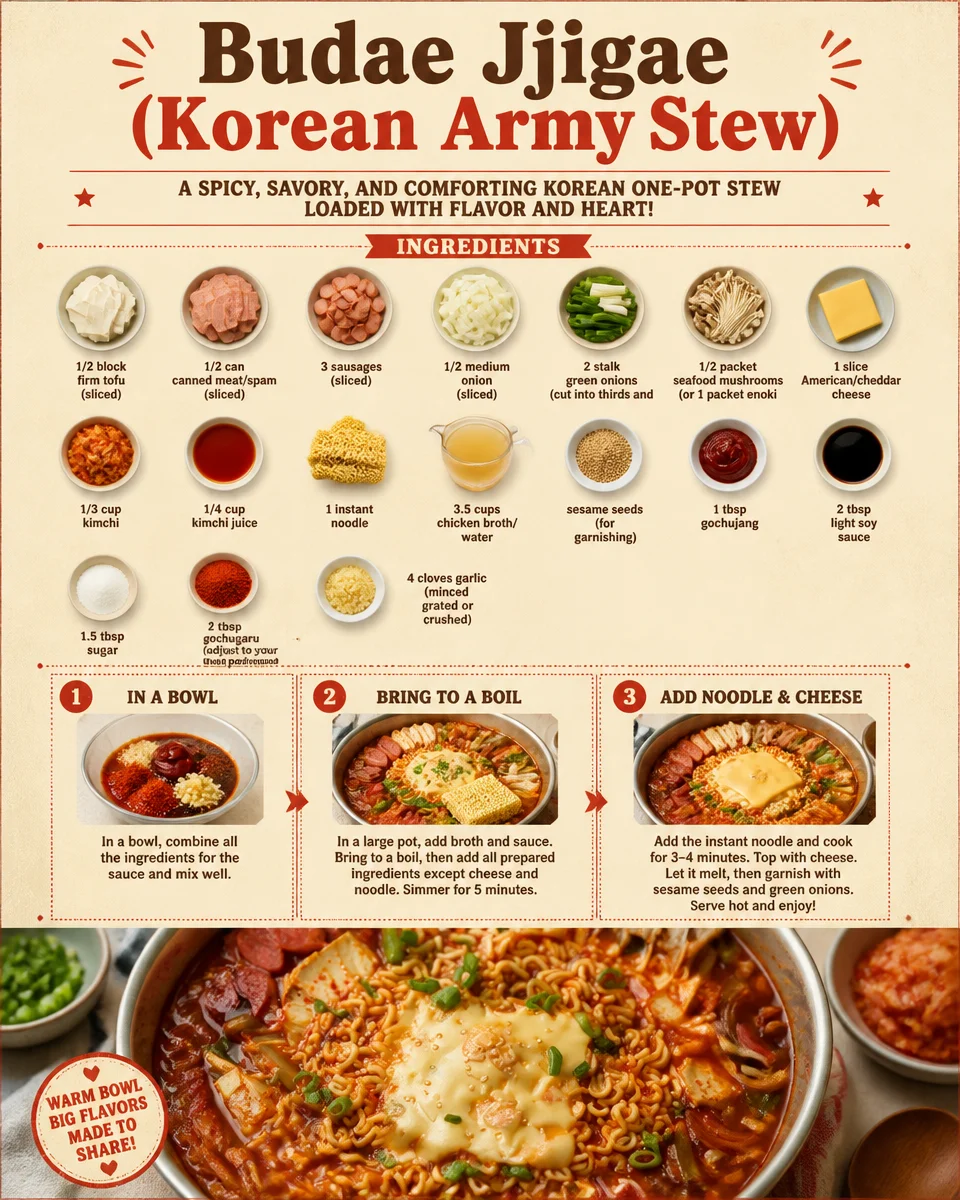
In a bowl, combine all the sauce ingredients (gochujang, soy sauce, sugar, gochugaru, and garlic) and mix until well blended.
In a shallow pot, arrange the sliced tofu, spam, sausages, onion, and mushrooms side by side in a circle, creating a beautiful color palette.
Place the kimchi and kimchi juice alongside and sprinkle the chopped green onions in the center.
Pour the sauce into the middle and gently add the chicken broth around the edges.
Set the pot to medium heat and bring it to a simmer. Once simmering, cover with a lid and let it cook for 6-8 minutes, allowing the flavors to meld.
Reduce heat to medium-low, add the instant noodles into the center, and cook for another 3-4 minutes until the noodles reach your desired texture. Gently swirl the noodles to ensure even cooking.
Top with a slice of cheese, garnish with reserved green onions and sesame seeds. Serve hot and enjoy!
A Healthier Perspective
To elevate the nutritional value of your Budae Jjigae, consider these tips:
- Add Extra Vegetables: Throw in some spinach or bok choy for added vitamins and minerals.
- Swap Sugar: Use monk fruit sweetener instead of refined sugar to lower the glycemic index.
Health Benefits of Kimchi: Kimchi is rich in probiotics, which aid digestion and improve gut health, making your Budae Jjigae not just delicious but also beneficial for your body.
The Troubleshooter
Why did my stew lack flavor?: Ensure you’re using high-quality kimchi and adjust your seasoning levels; sometimes a pinch of salt can enhance flavors.
Why did the noodles turn mushy?: Make sure to add the noodles towards the end of the cooking time to maintain a perfect texture.
Why is my stew too spicy?: If you’ve added too much gochugaru, try balancing the heat with a little extra sugar or coconut milk to neutralize the spice.
The Art of Serving
For a stunning presentation, serve your Budae Jjigae in a shallow pot, showcasing the vibrant colors of the ingredients. Pair with a crisp cucumber salad or a refreshing beverage like iced barley tea for a delightful contrast. This dish is perfect for sharing with friends or family on a chilly evening, making it a go-to comfort food.
The Dietary Lab
Vegan Adaptation:
- Substitute the tofu with soy-based vegan spam and omit the meat sausages. Use vegetable broth instead of chicken broth.
Gluten-Free Version:
- Ensure all sauces used are labeled gluten-free, as traditional soy sauce can contain gluten.
Keto Style:
- Substitute the kimchi with low-carb vegetables, and consider using shirataki noodles in place of instant noodles for a keto-friendly option.
Storage & Revival
Yield: Serves 3-4
Prep Time: 15 minutes
Cook Time: 15 minutes
The Revival Rule: To reheat, place your Budae Jjigae in a heavy-bottomed pot over medium-low heat, stirring frequently until warmed through. Avoid reheating in the microwave, as it can make the noodles chewy and less enjoyable.
Frequently Asked Questions
What meat can I use in Budae Jjigae?
You can use canned spam, hot dogs, or even leftover cooked meats like beef or chicken for great flavor.
Can I make this dish vegetarian or vegan?
Absolutely! Use plant-based spam and omit animal products to enjoy a vegan Budae Jjigae.
How spicy is Budae Jjigae?
The spiciness depends on your preference. Adjust the gochugaru quantity to achieve your preferred heat level.
What should I serve with Budae Jjigae?
It pairs beautifully with steamed rice or a light salad to balance the richness of the stew.
How can I store leftovers?
Store leftovers in an airtight container in the refrigerator for up to 3 days. Reheat gently on the stove.
Is Budae Jjigae healthy?
It can be nutritious, especially with the addition of vegetables and fermented kimchi, offering probiotics and vitamins.
Can I use other types of noodles?
Yes! Feel free to substitute with udon, soba, or glass noodles based on your taste preference.
How does kimchi affect the flavor?
Kimchi adds tanginess, depth, and a probiotic element that enhances both flavor and nutritional value.
Can I substitute the broth?
Yes! Any savory broth, like vegetable or beef broth, can be used in place of chicken broth for different flavor profiles.
What type of cheese works best?
American or cheddar cheese melts well, adding creaminess, but feel free to try different varieties according to your taste!
As you savor your Budae Jjigae, let it remind you of home and heartfelt connections. Each spoonful carries warmth and nostalgia, a lasting invitation to share this delicious dish with loved ones. Leave a comment below if you tried the Satisfy Your Cravings: Comforting Budae Jjigae! For more culinary delights, check out my recipes for Spicy Kimchi Stew, Soy-Glazed Tofu, and Korean BBQ Chicken.
Budae Jjigae
Ingredients
Method
- In a bowl, combine all the sauce ingredients (gochujang, soy sauce, sugar, gochugaru, and garlic) and mix until well blended.
- In a shallow pot, arrange the sliced tofu, spam, sausages, onion, and mushrooms side by side in a circle, creating a beautiful color palette.
- Place the kimchi and kimchi juice alongside and sprinkle the chopped green onions in the center.
- Pour the sauce into the middle and gently add the chicken broth around the edges.
- Set the pot to medium heat and bring it to a simmer. Once simmering, cover with a lid and let it cook for 6-8 minutes, allowing the flavors to meld.
- Reduce heat to medium-low, add the instant noodles into the center, and cook for another 3-4 minutes until the noodles reach your desired texture. Gently swirl the noodles to ensure even cooking.
- Top with a slice of cheese, garnish with reserved green onions and sesame seeds. Serve hot and enjoy!