Unlocking the Flavor: The Art of Basil Salt
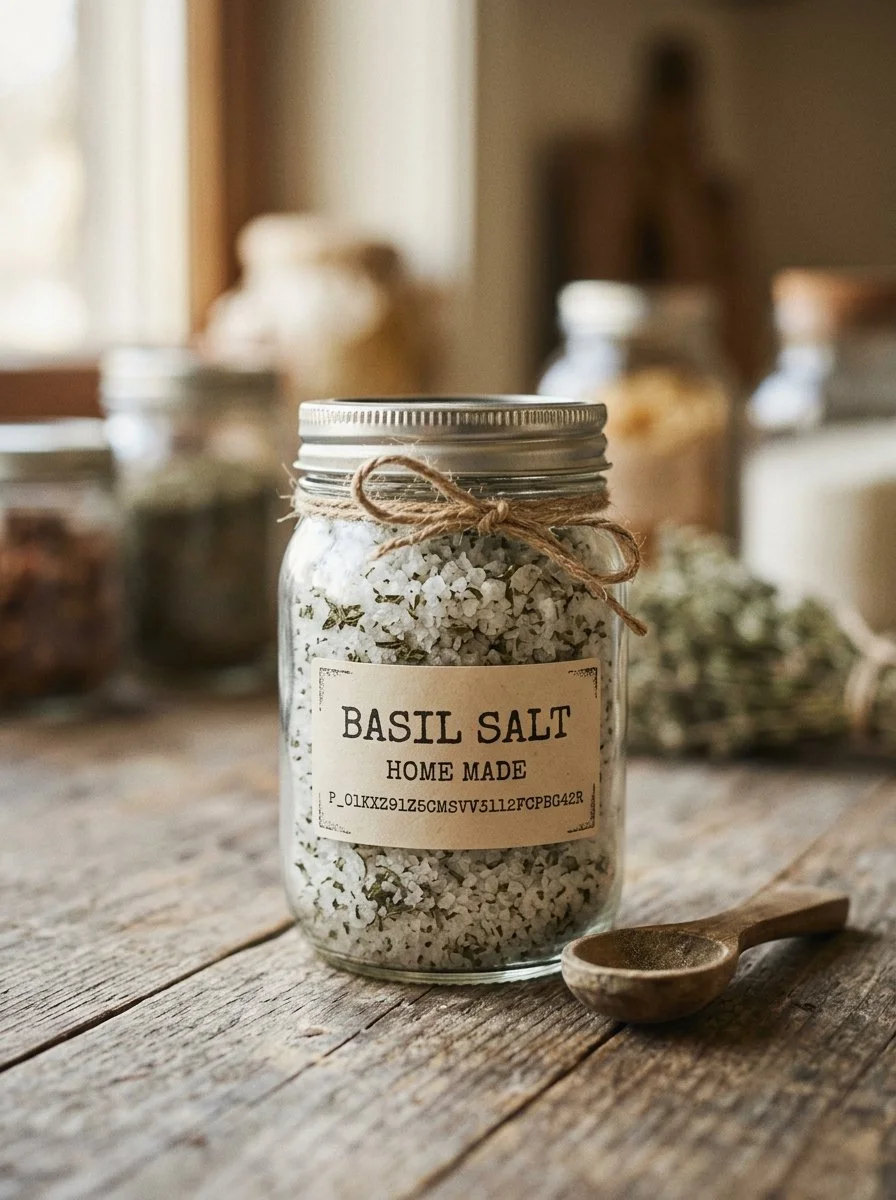
Imagine the first bite of a perfectly seasoned dish, where the fragrant aroma of fresh basil dances with the crunch of sea salt on your palate. The harmonious blend delivers a savory flavor explosion that intertwines with the comforting warmth of home-cooked meals. Basil salt isn’t just a seasoning; it’s a culinary experience that elevates your favorite dishes, adding depth and flavor. You may also find Salted Caramel Apple Pie Cheesecake useful.
The Origin & Heritage
Basil salt has its roots in traditional culinary practices, especially in Mediterranean cooking. It’s reminiscent of the delightful summers spent in Grandma’s kitchen, where fresh herbs graced every dish. She would fuss over the green basil leaves, layering them in jars filled with sea salt—her way of preserving summer’s bounty. This cultural tradition not only amplifies flavors but also connects us to our heritage, celebrating the earthy essence of basil.
The Science of Flavor
- Natural Balance: The essential oils in basil work wonders with the crystallized flavor of sea salt, creating a unique taste profile.
- Herb Preservation: Combining basil with salt extends the herb’s shelf life while maintaining its aromatic compounds.
- Flavor Enhancement: Salt elevates the sweetness of basil, rounding off sharp flavors and smoothing out the overall taste.
- Umami Boost: Basil salt can intensify the umami profile of dishes, making them more satisfying and flavorful.
- Versatility: This seasoning complements a wide range of dishes, from meats to vegetables, allowing for creative and delicious meal options.
The Ingredients
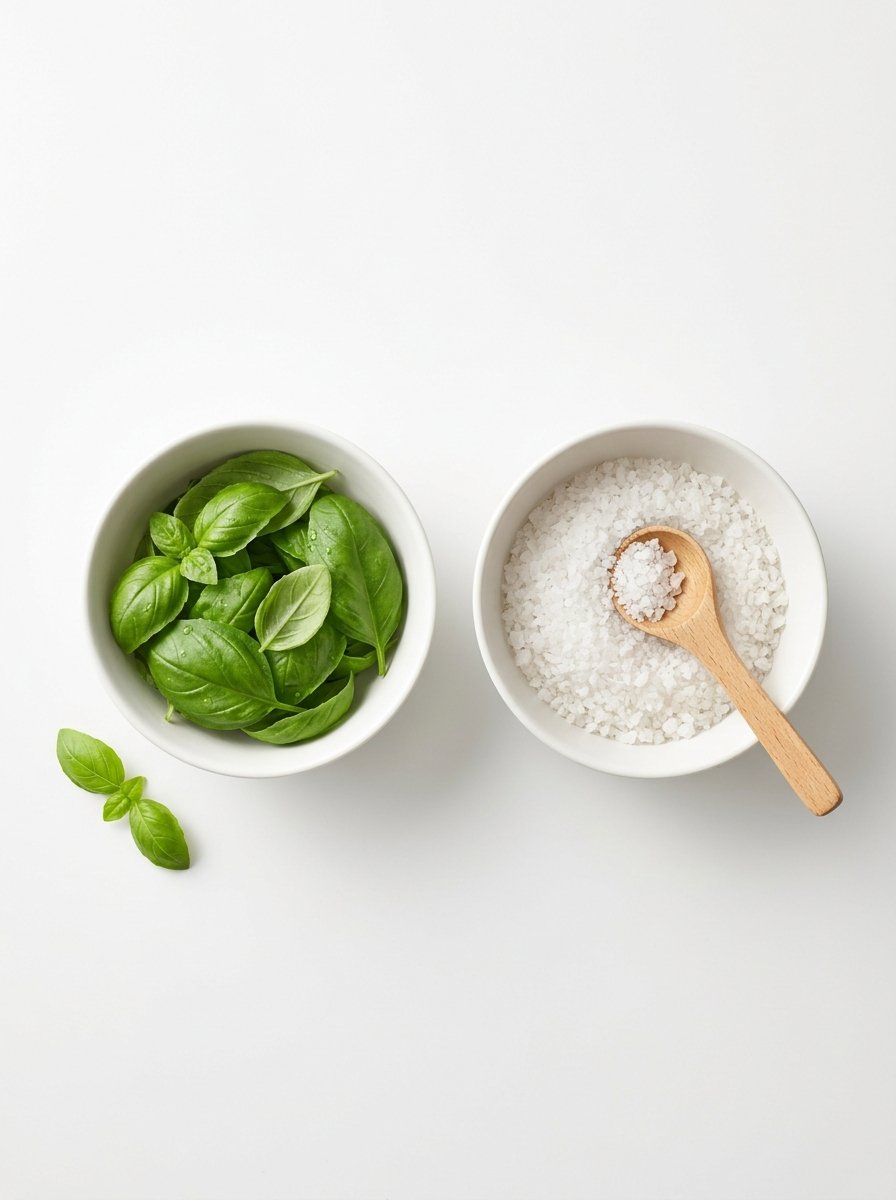
Essential Ingredients:
- Fresh basil leaves
- Sea salt
Quality Hacks:
- Fresh Basil: Look for vibrant green leaves that are free from brown spots. The fresher the basil, the more aromatic and flavorful your salt will be.
- Sea Salt: Opt for flaky sea salt as it dissolves more uniformly and coats the basil leaves better, ensuring an even flavor distribution.
The Masterclass Instructions
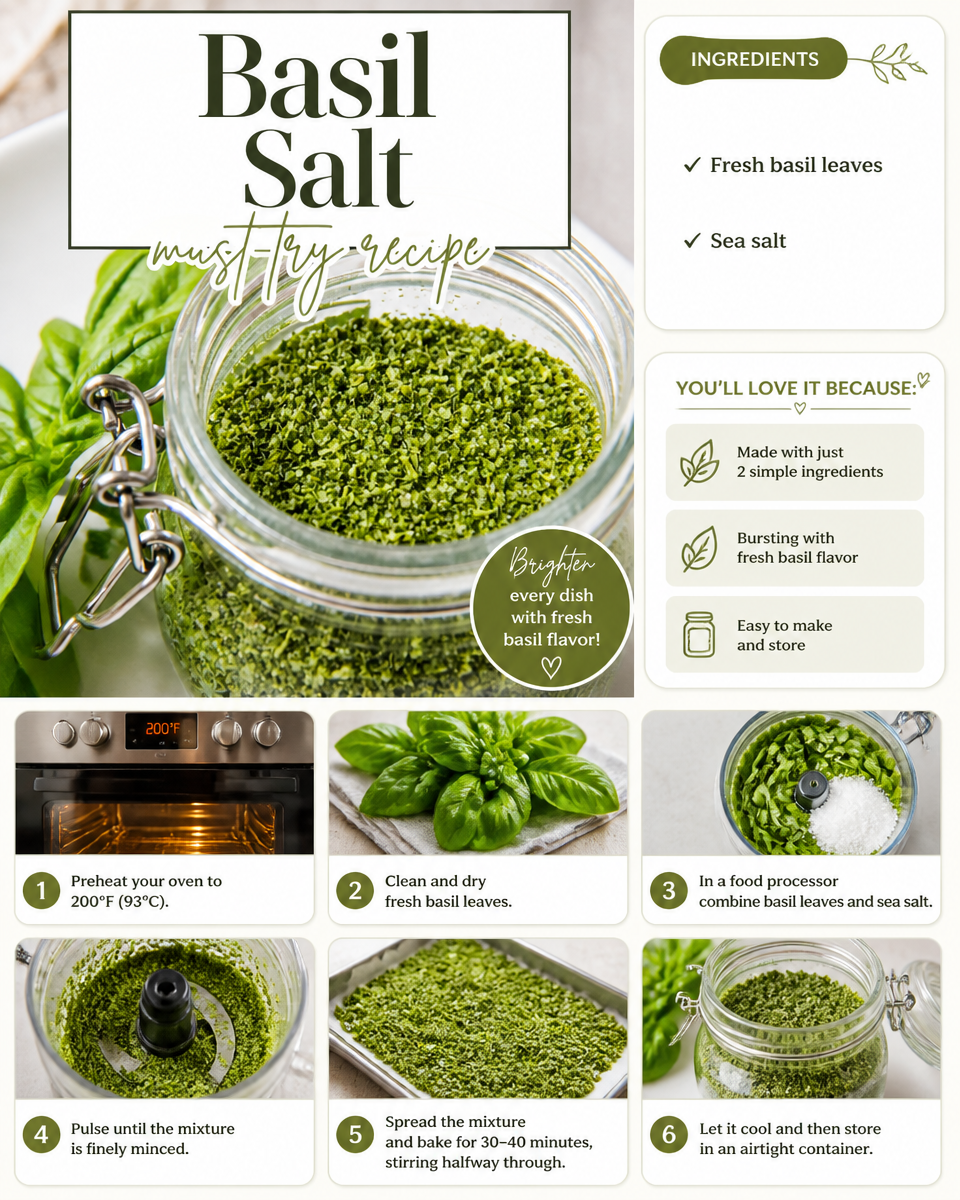
- Preheat your oven to 200°F (93°C).
- Clean and dry fresh basil leaves thoroughly, ensuring no moisture remains.
- In a food processor, combine the basil leaves and sea salt.
- Pulse until the mixture is finely minced and well blended.
- Spread the mixture onto a baking sheet in an even layer, ensuring it’s not too thick.
- Place the baking sheet in the oven and dry for about 30 minutes, allowing the flavors to concentrate.
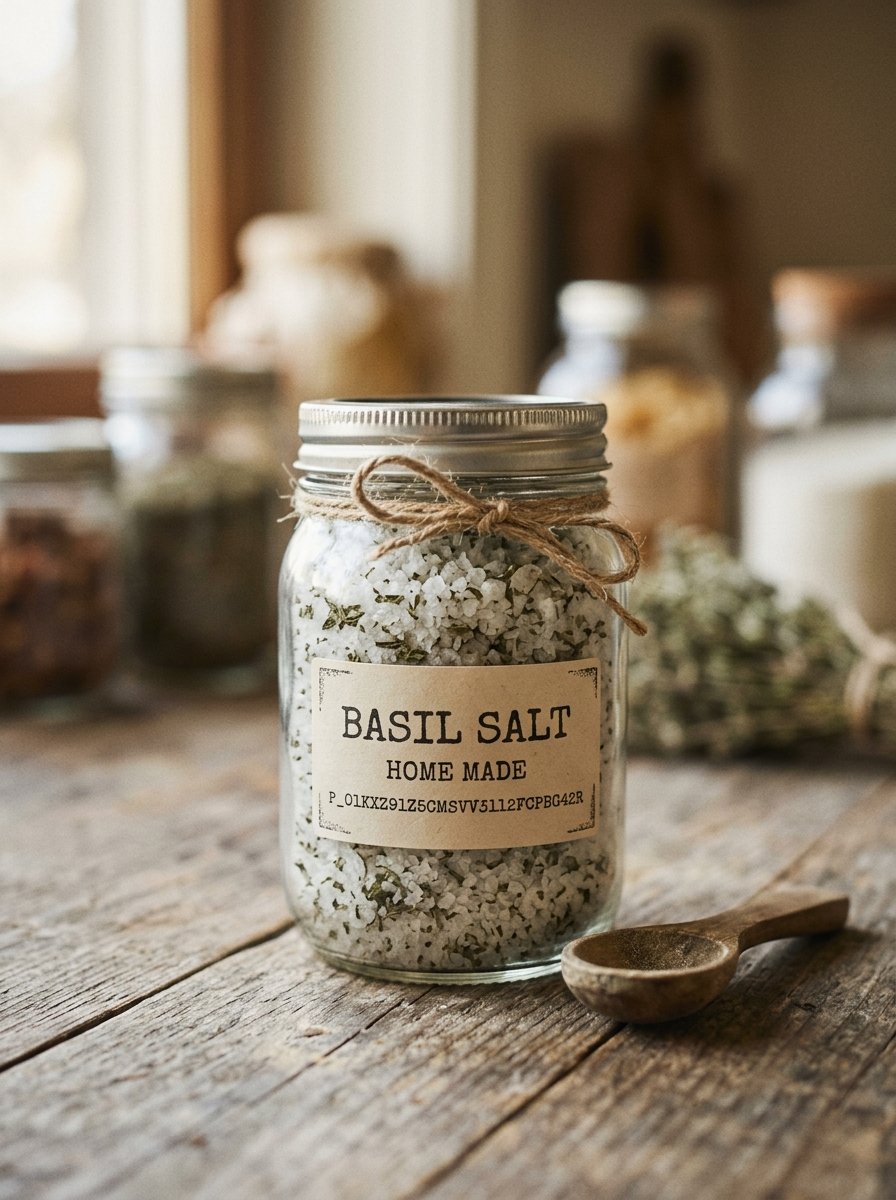
- Once dried, let it cool completely and then store in an airtight container.
A Healthier Perspective
Basil salt not only perks up your dishes but can also enhance their nutritional value. Here are a few tips:
- Experiment with Herbs: Add dried herbs like thyme or oregano to your basil salt for an herby blend.
- Use Sparingly: Moderation is key, so sprinkle lightly to avoid overpowering your dish.
- Incorporate Nutrient-Dense Ingredients: Pair with whole foods like quinoa or roasted veggies for a balanced meal.
Basil is known for its anti-inflammatory properties, which can aid in digestion and contribute to overall health.
The Troubleshooter
Why did my basil salt lose its color?
Ensure your oven temperature is low enough to dry the basil without cooking it.Why is my basil salt clumpy?
Clumping can happen if the basil isn’t dried thoroughly before mixing with salt. Make sure to fully dry the leaves.Why does my basil salt have an off taste?
If using old or wilted basil leaves, they can impart an unpleasant flavor. Always opt for fresh herbs.
The Art of Serving
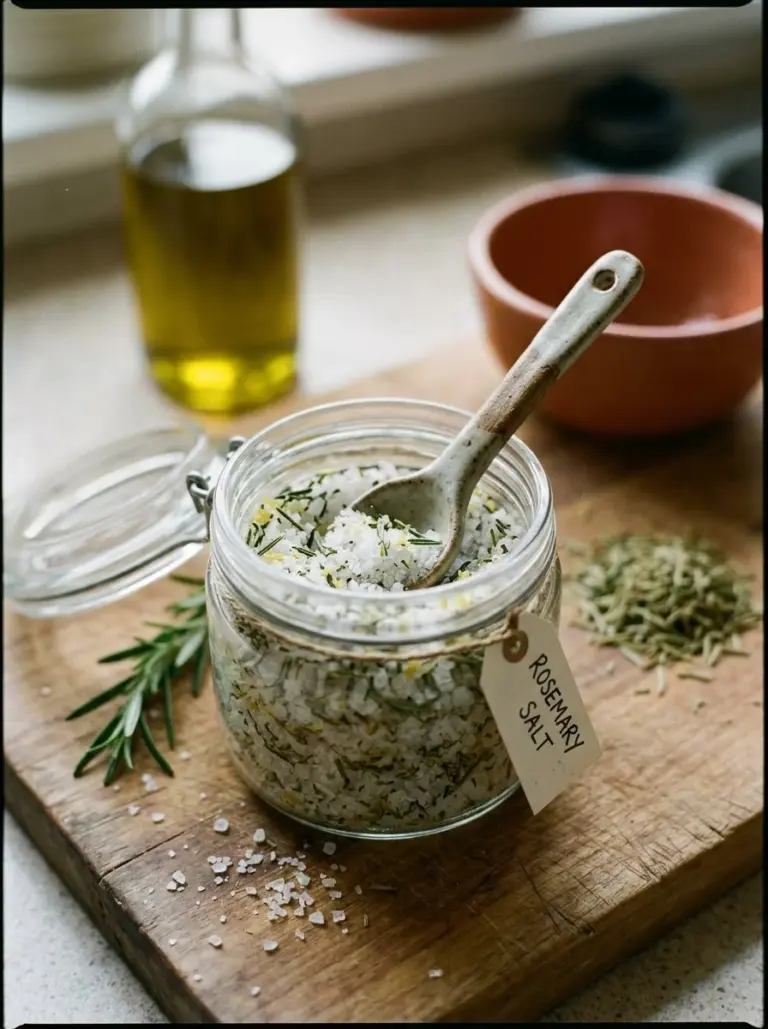
Basil salt can be served in various enticing ways. Try sprinkling it on roasted vegetables, fresh salads, or grilled meats. Pair it with a refreshing white wine or herbal tea to complement the dish. Elegant plating, using colorful ingredients and minimalistic garnishes, will enhance the experience.
The Dietary Lab
If you’re following a specific dietary guideline, basil salt can easily be adapted:
- Vegan: This recipe is naturally vegan.
- Gluten-Free: Basil salt is gluten-free as is.
- Keto: It makes an excellent seasoning for low-carb dishes.
Storage & Revival
- Yield: Approximately ½ cup
- Prep Time: 10 minutes
- Cook Time: 30 minutes
The Revival Rule: To revive the flavor, simply sprinkle over your dish just before serving. Avoid microwaving your basil salt; it will compromise the texture and flavor of your seasoning.
FAQ
What is basil salt used for?
Basil salt enhances various dishes, providing a burst of flavor to meats, vegetables, and even popcorn.
How long does basil salt last?
When stored in an airtight container, it can last for several months.
Can I use dried basil instead?
Yes, but fresh basil yields a more vibrant flavor.
Is basil salt healthy?
Yes, it offers the benefits of basil while enhancing flavorful dishes in moderation.
Where can I buy basil salt?
Many specialty food stores carry it, or you can easily make it at home using this recipe.
Can I make basil salt without an oven?
Yes, you can air dry the basil if no oven is available, but this takes longer.
Does basil salt go bad?
It can lose its potency over time but doesn’t spoil in the traditional sense.
How should I store my basil salt?
Keep it in a cool, dark place in an airtight container to maintain freshness.
Can I add other herbs to my basil salt?
Absolutely! Mix in your favorite dried herbs for a personalized blend.
What dishes pair well with basil salt?
It pairs wonderfully with grilled proteins, fresh salads, and roasted vegetables.
The Final Bite
Basil salt is not just a seasoning; it’s a celebration of flavor that transports you to the heart of the kitchen. Leave a comment below if you tried the delightful Unlocking the Flavor: The Art of Basil Salt! For more exciting recipes, consider checking out Basil Chimichurri, French Salted Butter Cookies, and No-Bake Salted Caramel Pretzel Bars.
Conclusion
Basil salt is an extraordinary seasoning that can enhance a multitude of dishes. For a deeper dive into flavorful herbs, you might find this Basil Salt Recipe – A Pretty Life In The Suburbs insightful. Additionally, if you’re looking for more ways to incorporate this versatile seasoning, check out this guide on How to Make Basil Salt: An Easy Herb Infused Flavored Salt. Enjoy your culinary journey!
Basil Salt
Ingredients
Method
- Preheat your oven to 200°F (93°C).
- Clean and dry fresh basil leaves thoroughly, ensuring no moisture remains.
- In a food processor, combine the basil leaves and sea salt.
- Pulse until the mixture is finely minced and well blended.
- Spread the mixture onto a baking sheet in an even layer, ensuring it’s not too thick.
- Place the baking sheet in the oven and dry for about 30 minutes, allowing the flavors to concentrate.
- Once dried, let it cool completely and then store in an airtight container.