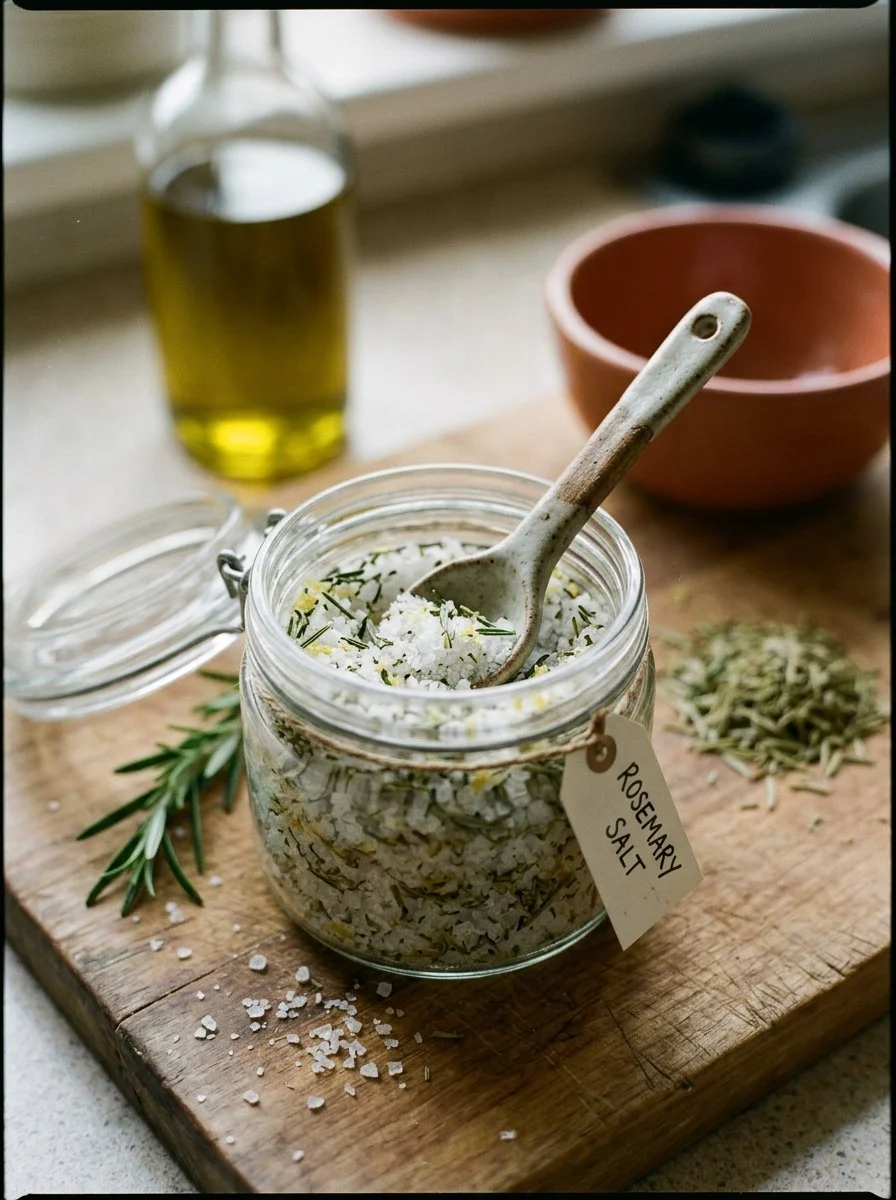
Elevate Your Dishes with Homemade Rosemary Salt
Imagine the moment when you sprinkle a vibrant blend of rosemary salt over your dishes—the subtle crunch of the salt, the aromatic whiff of rosemary mingling with the zesty lemon, and the burst of flavor that follows in a harmonious symphony. Each bite whispers of garden-fresh herbs that elevate any meal from ordinary to extraordinary. Not only is this homemade rosemary salt simple to make, but it also brings a gourmet touch to the everyday. You may also find Homemade All Butter Pie Crust useful.
The Origin & Heritage
Homemade rosemary salt harkens back to rustic kitchens where people sought to preserve the essence of fresh herbs. I fondly remember visiting my grandmother’s kitchen, where the rich aroma of rosemary would fill the air as she infused salt and herbs to elevate her savory creations. This timeless technique has roots in culinary traditions that value the art of seasoning, allowing you to enjoy the flavors of nature and create unforgettable dishes in your own kitchen.
The Science of Flavor
Here are five reasons why this combination of ingredients is so effective:
- Flavor Enhancement: The coarse sea salt amplifies the natural umami found in foods, making every bite more flavorful.
- Aromatic Complexity: Fresh rosemary adds layers of aromatic compounds that stimulate the senses.
- Acidity Balance: Lemon zest brings a bright acidity that balances the earthiness of the salt and herbs.
- Preservation: Salt acts as a preservative, allowing your rosemary salt to stay fresh longer while maintaining its flavor profile.
- Visual Appeal: The vibrant colors of rosemary and zest add aesthetic value to your dishes, making them even more inviting.
The Ingredients
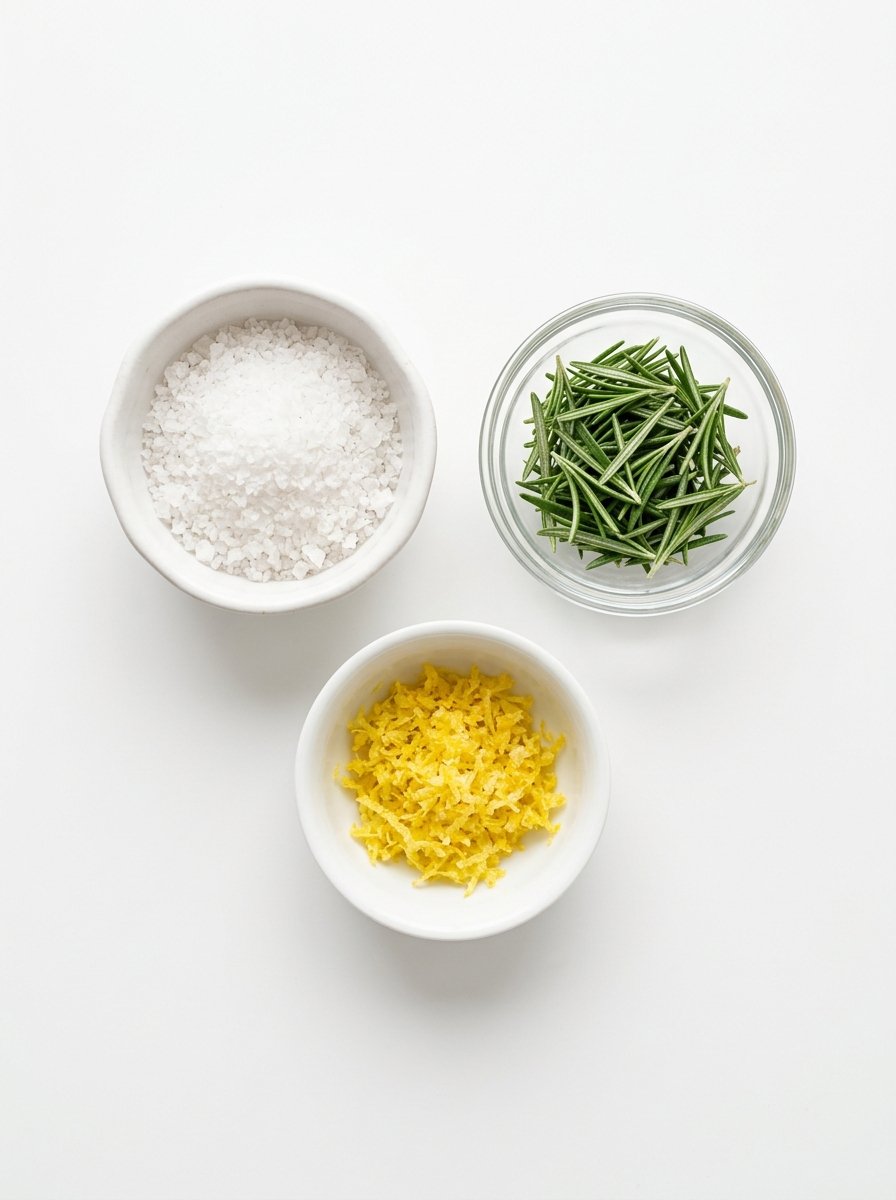
Ingredients:
- 1 cup coarse sea salt
- 1/4 cup fresh rosemary leaves
- Zest of 1 lemon
Quality Hacks:
- Coarse Sea Salt: Look for high-quality, flaky sea salt for the best texture and flavor.
- Fresh Rosemary: Opt for herbs that are vibrant and aromatic; dried herbs won’t deliver the same flavor punch.
The Masterclass Instructions
Place 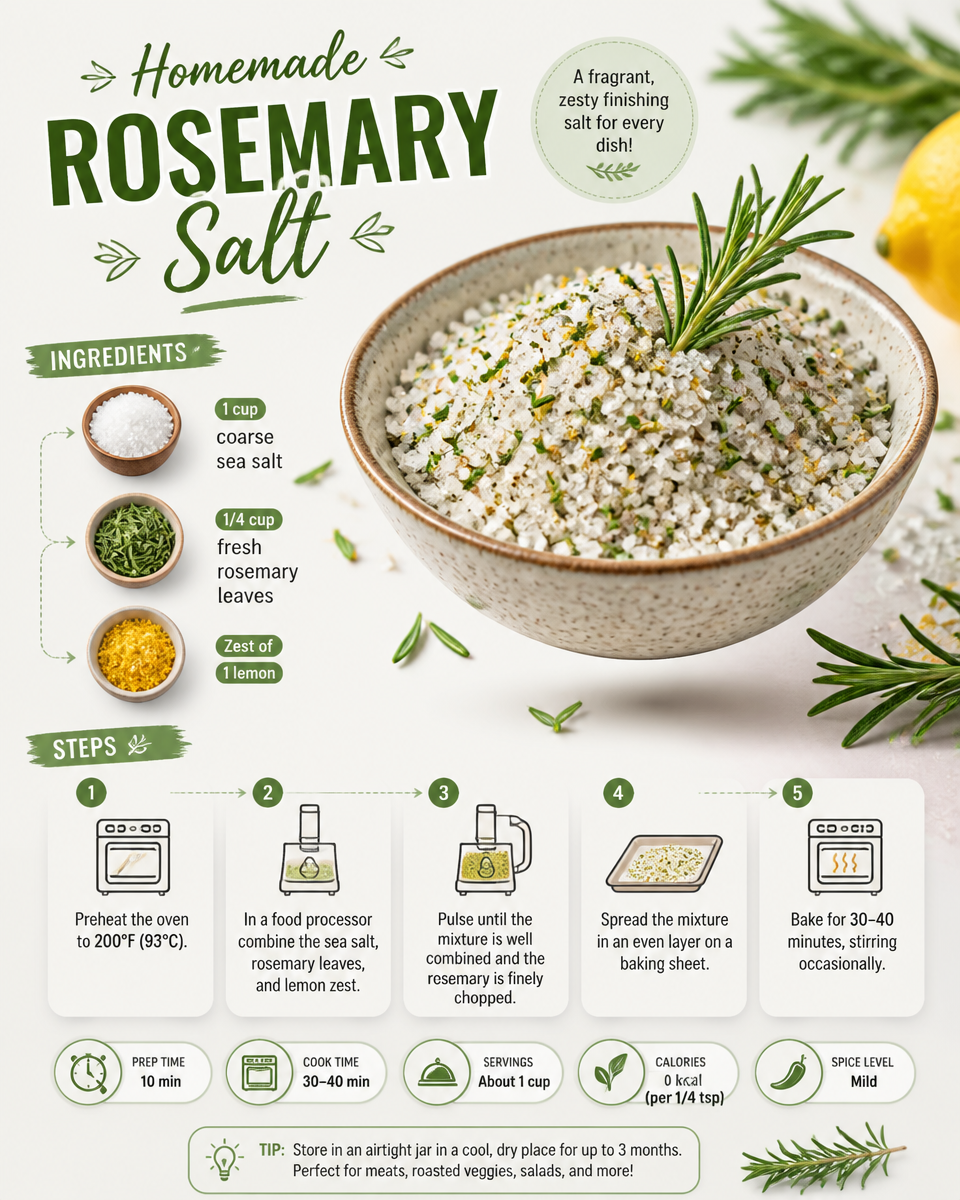
tag BEFORE this section.
- Preheat the oven to 200°F (93°C).
- In a food processor, combine the sea salt, rosemary leaves, and lemon zest. Pulse until the mixture is well combined and the rosemary is finely chopped.
- Spread the mixture evenly on a baking sheet.
- Bake in the preheated oven for about 30 minutes, stirring occasionally, until the rosemary is dry and fragrant.
- Let cool, then transfer the rosemary salt to an airtight container for storage.
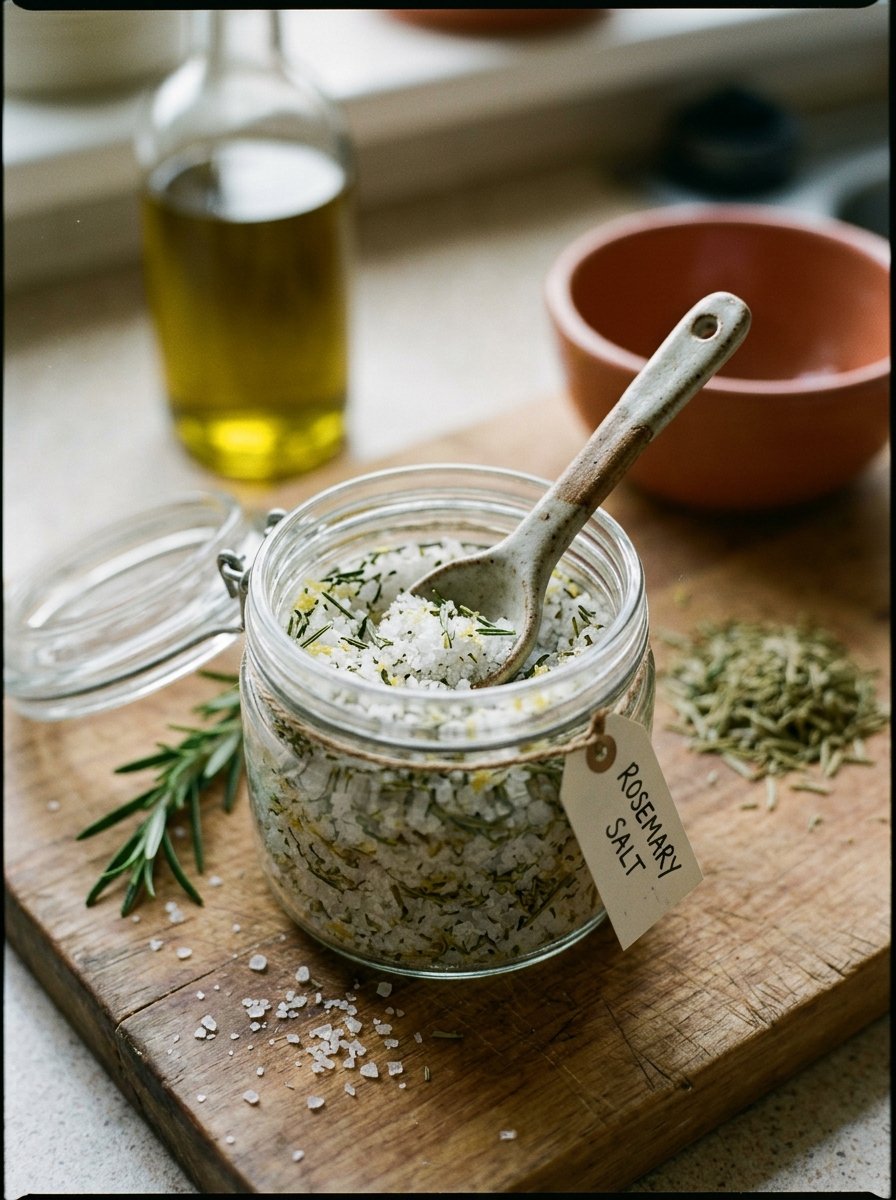
As you pulse the ingredients, the vibrant green of the rosemary will meld beautifully with the white salt, creating a visually appealing mixture that is ready to elevate your dishes.
A Healthier Perspective
When considering the health benefits of your homemade rosemary salt, focus on the rosemary. This herb is known for its antioxidant properties and can aid in digestion. To boost the nutritional value of your dishes, consider the following tips:
- Replace traditional table salt with your homemade rosemary salt to introduce a flavorful twist with added antioxidants.
- Use this salt to season roasted vegetables, enhancing their nutritional profile and flavor.
- Pair your seasoning with lean proteins like chicken or fish for a healthier meal option.
The Troubleshooter
Here are three common "Why did it fail?" scenarios and their solutions:
- Not Fragrant Enough: Ensure that your rosemary is fresh and aromatic before starting. Dried rosemary won’t provide the same rich flavor.
- Salt Overpowering: If you find the salt too strong, reduce the amount used in cooking and adjust according to taste.
- Clumping During Storage: Make sure your mixture is completely cool before transferring it to an airtight container to minimize moisture.
The Art of Serving
Homemade rosemary salt is versatile and can be enjoyed in various ways. Consider these serving suggestions:
- Plating: Sprinkle it over grilled meats or roasted vegetables as a finishing touch.
- Drink Pairings: It pairs well with light wines and artisanal cocktails, enhancing the flavors.
- Setting: Serve alongside a rustic cheese board for an elegant touch at gatherings.
The Dietary Lab
This recipe is inherently gluten-free and can easily accommodate vegan or keto diets. To make it low-carb, simply use the same ingredients without any changes, and enjoy the burst of flavor with minimal carbs.
Storage & Revival
Yield: Approximately 1 cup
Prep Time: 10 minutes
Cook Time: 30 minutes
For best results, store your rosemary salt in an airtight container at room temperature, away from direct sunlight. If it loses its crunch, simply place it back in a 200°F oven for a few minutes to revive its texture. Avoid microwaving to keep the integrity of your rosemary salt intact.
FAQ
What types of dishes can I use rosemary salt with?
You can enhance meats, vegetables, and even baked goods with homemade rosemary salt.
How long does homemade rosemary salt last?
When stored properly, it can last up to a year without losing flavor.
Can I use dried rosemary instead?
While it’s possible, fresh rosemary yields the best flavor and aroma.
How do I adjust the saltiness?
You can incorporate less salt or increase the amount of herbs according to your taste preferences.
Is there a substitute for rosemary?
Thyme or oregano can be used as alternatives, though they will alter the flavor profile.
Can this recipe be doubled?
Absolutely, just ensure to adjust your baking time accordingly.
Can children use this in their cooking?
Yes, it’s a safe and flavorful seasoning for all ages!
How can I use this salt as a gift?
Transfer it to a decorative jar and include a label for an eco-friendly gift.
What is the best way to serve it?
Sprinkle it on dishes right before serving to preserve its aroma.
Can I add other herbs?
Mixing in herbs like sage or thyme can create unique seasoning blends.
The Final Bite
This homemade rosemary salt is a culinary game-changer, perfect for spicing up your meals and impressing your guests. Leave a comment below if you tried the Homemade Rosemary Salt! If you’re inspired to create more delicious dishes, check out my recipes for Creamy Dijon Rosemary Chicken, French Salted Butter Cookies, and Homemade Apple Pie.
Conclusion
Creating homemade rosemary salt is a simple yet rewarding kitchen project. You’ll discover endless uses for this fragrant seasoning that elevates the everyday to gourmet. For more insights on rosemary salt, you may want to explore Rosemary Salt – Aubrey’s Kitchen or check out the comprehensive Rosemary Salt Recipe – A Pretty Life In The Suburbs.
Homemade Rosemary Salt
Ingredients
Method
- Preheat the oven to 200°F (93°C).
- In a food processor, combine the sea salt, rosemary leaves, and lemon zest. Pulse until well combined and the rosemary is finely chopped.
- Spread the mixture evenly on a baking sheet.
- Bake in the preheated oven for about 30 minutes, stirring occasionally, until the rosemary is dry and fragrant.
- Let cool, then transfer the rosemary salt to an airtight container for storage.